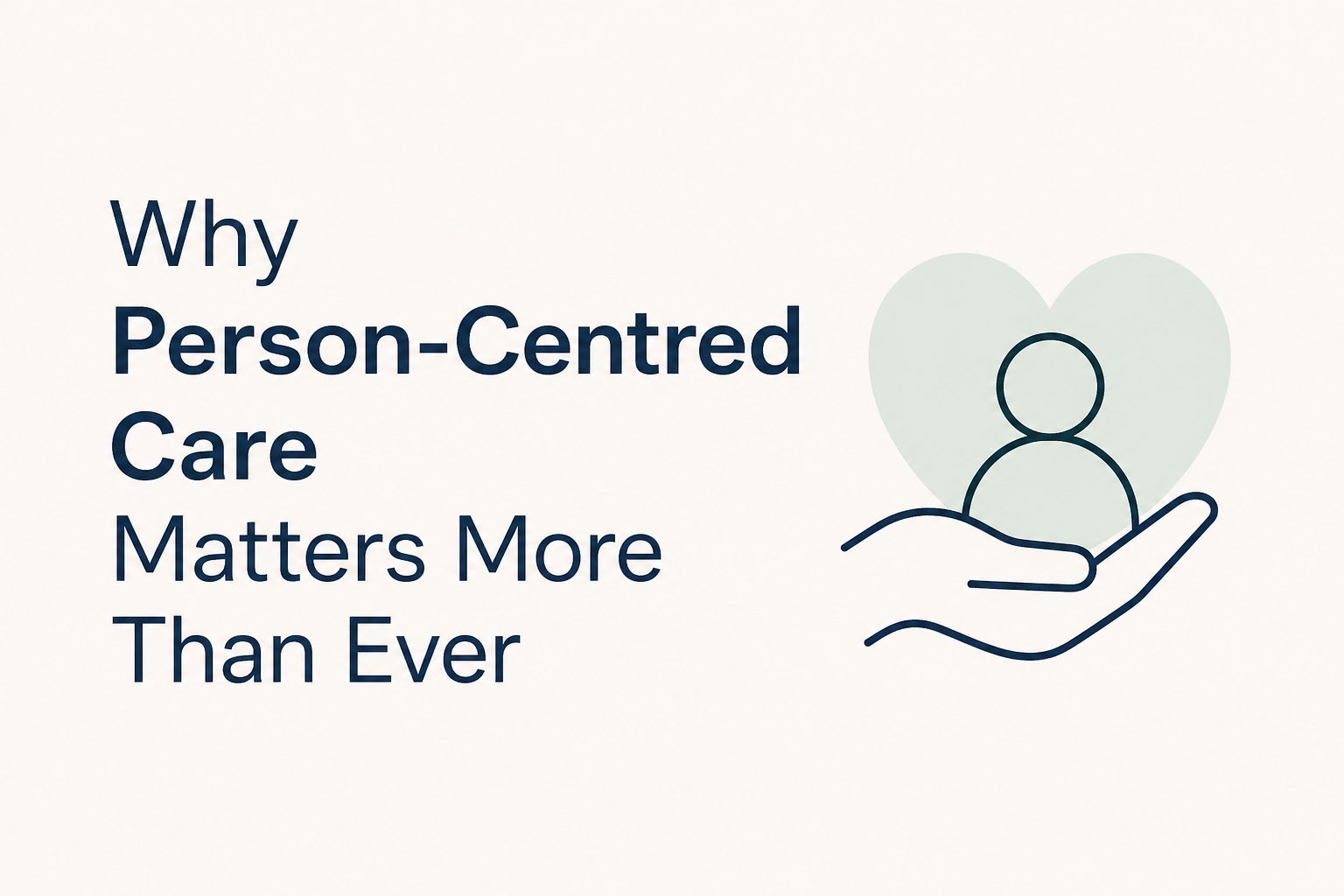
Person-centred care is one of the most important principles in modern adult social care, yet many new carers struggle to understand what it actually means in practice.
At its core, person-centred care means treating people as individuals, not tasks.
What Person-Centred Care Looks Like
Every person has different:
- Preferences
- Routines
- Backgrounds
- Communication styles
- Cultural needs
- Emotional needs
Good care adapts to the individual instead of forcing everyone into the same routine.
Small Actions Make a Big Difference
Person-centred care is often reflected in simple daily actions, such as:
- Asking how someone prefers to be addressed
- Respecting personal routines
- Encouraging independence
- Listening carefully
- Supporting choices wherever possible
These moments build trust and dignity.
Why It Matters in Real Care Settings
People receiving care may already feel vulnerable or anxious. When carers rush tasks or ignore preferences, it can make individuals feel invisible.
Person-centred support helps improve:
- Emotional wellbeing
- Communication
- Trust between carers and service users
- Quality of life
- Overall care outcomes
Challenges New Carers Face
New carers sometimes focus only on completing tasks quickly. That’s understandable when entering a busy environment for the first time.
But truly effective care balances efficiency with empathy.
Learning how to communicate properly, observe emotional cues, and support independence takes practice and guidance.
How GettingIntoCare Teaches This
Our training modules use practical scenarios from real care environments to explain how person-centred care works day to day.
We focus on:
- Communication skills
- Building confidence
- Professional boundaries
- Respect and dignity
- Real workplace situations
Final Thoughts
Person-centred care is not just a policy term. It shapes how people experience support every single day.
The best carers understand that quality care starts with seeing the person first, not just the task.